
Diamond grinding, crack repair, moisture-barrier basecoat, full-rejection flake and a polyaspartic seal — from $2,600 installed.
A Los Angeles garage floor takes more abuse than any other surface in the house: 300-degree tire contact after a freeway run, jack stands, dropped tools, oil and brake fluid, and — in the Valley — summer slab temperatures that make cheap coatings let go. A painted or bare slab gives up fast here. Our garage systems are engineered for exactly this room.
Because we manufacture the coatings ourselves, every garage gets the full build: a moisture-barrier epoxy basecoat over diamond-ground concrete, your choice of finish, and a UV-stable polyaspartic topcoat that doesn't yellow in the sun pouring through an open garage door. The result carries a limited lifetime residential warranty from one company — the same people who made the material and installed it.
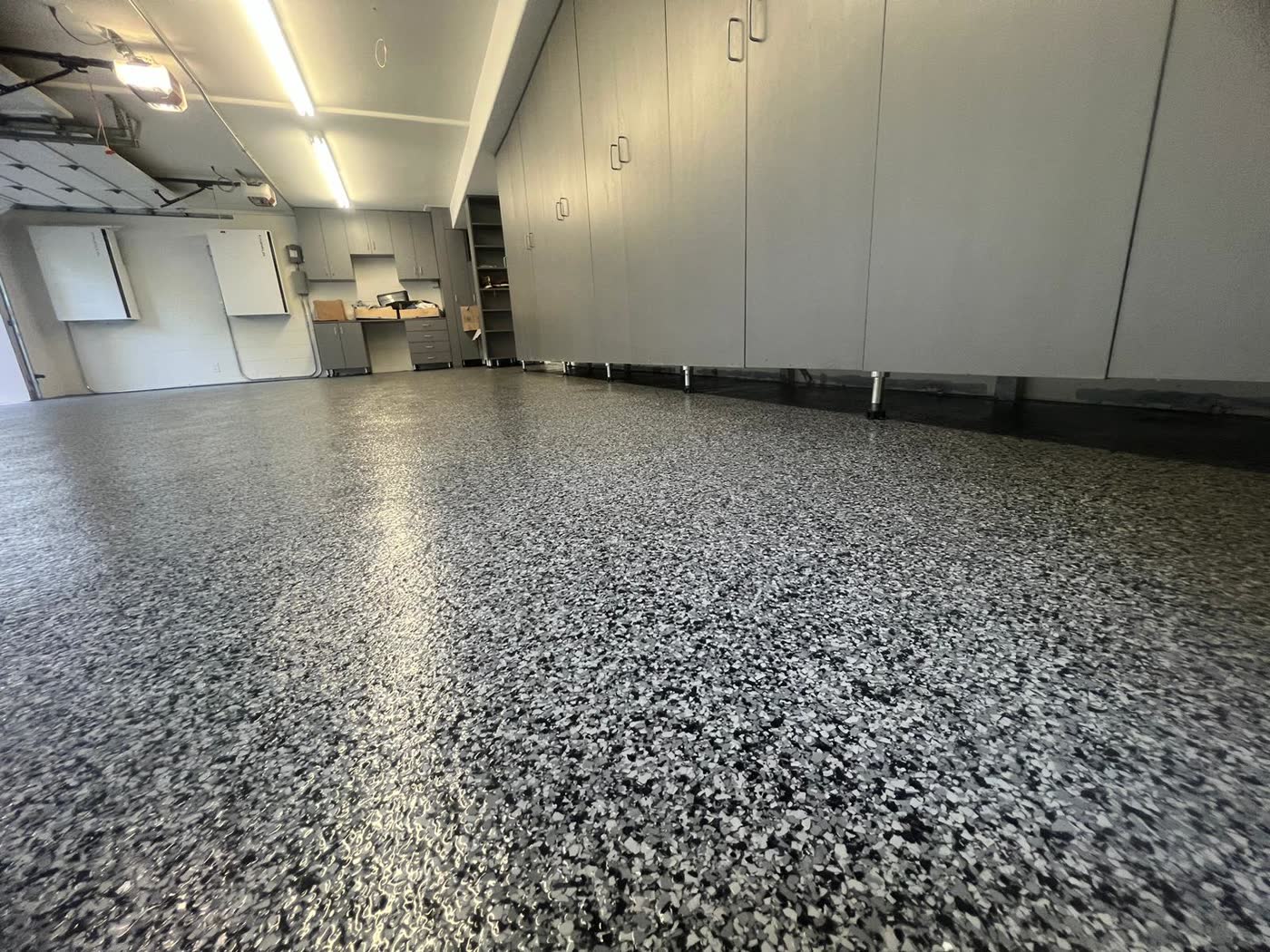
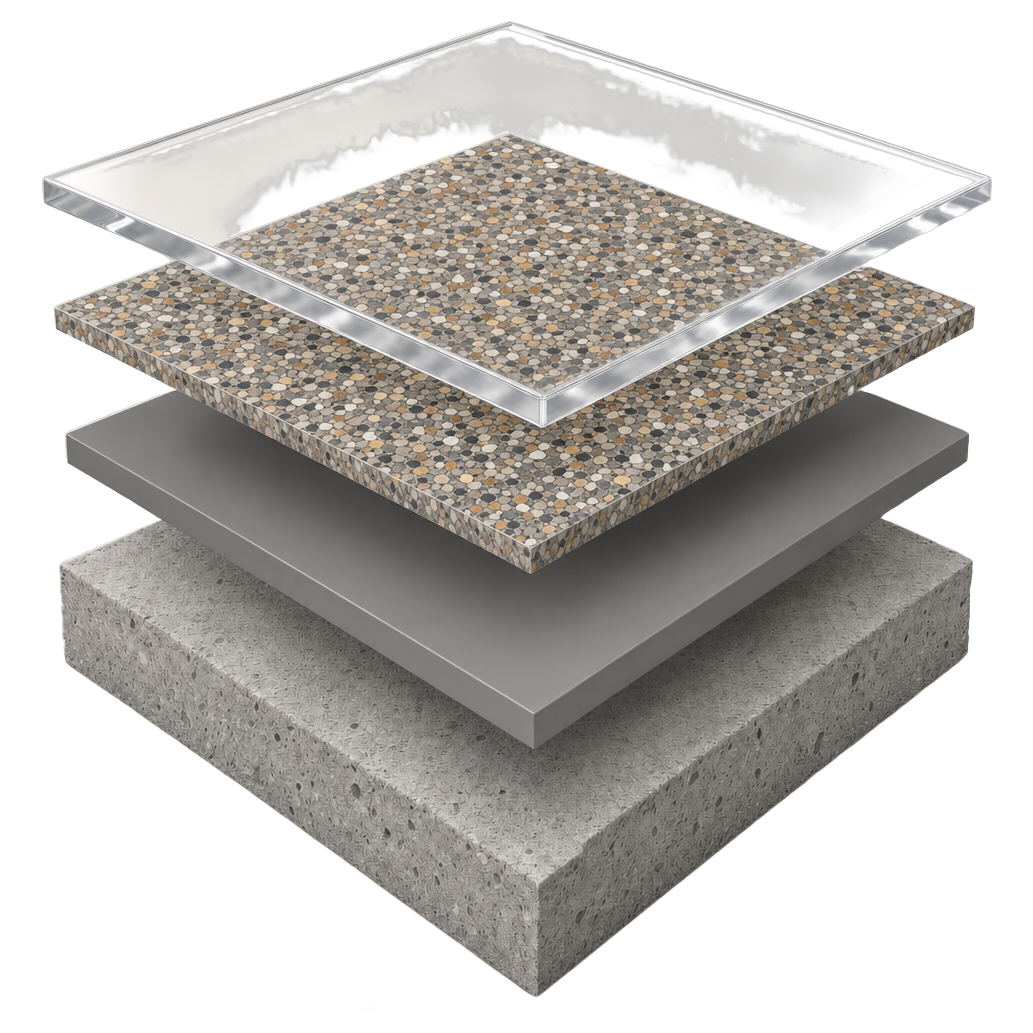
The LA favorite. Full-rejection flake broadcast hides dust and tire marks, adds grip, and installs morning-to-evening. Browse the color chart.
Flake system →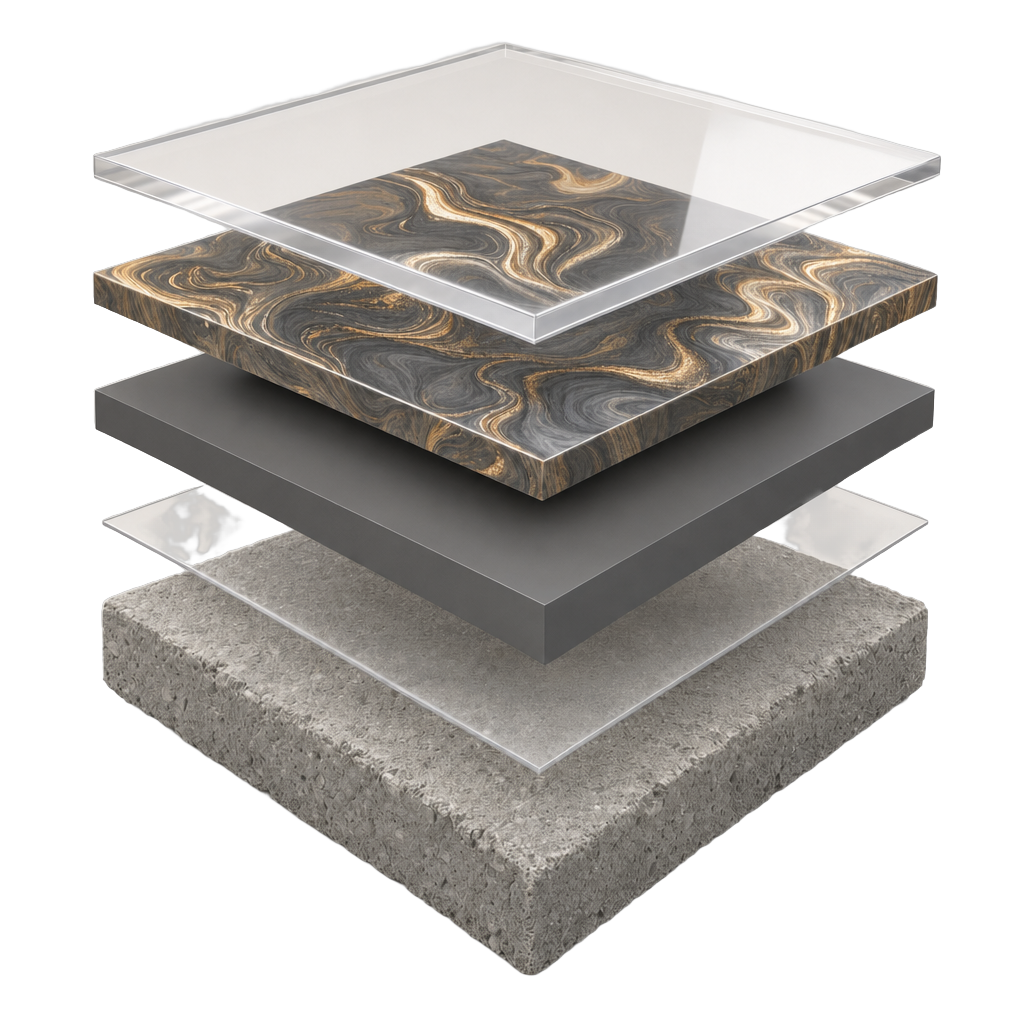
Hand-poured pigments that move like stone. For garages that double as showrooms, gyms or studios.
Metallic epoxy →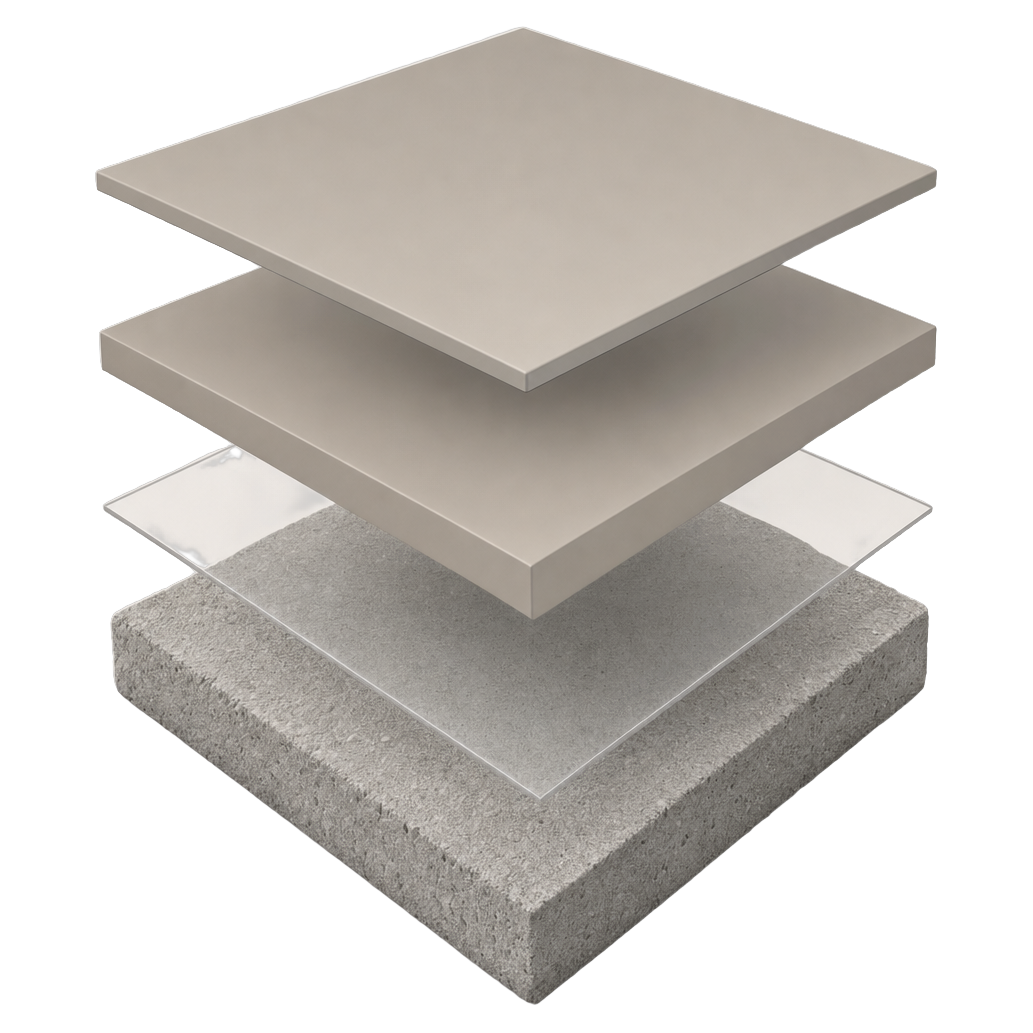
Clean, uniform, easy to sweep. The workshop standard, in gloss, satin or matte.
Solid color →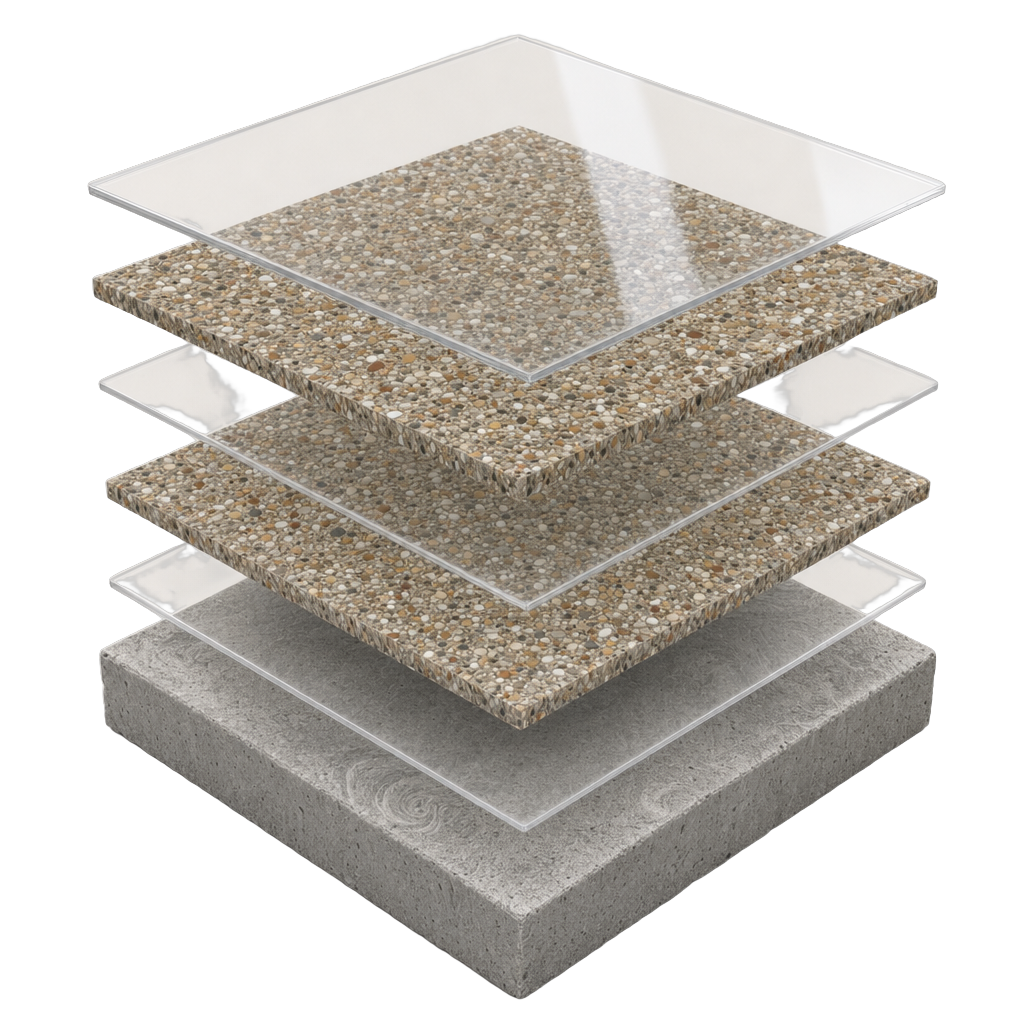
Double-broadcast quartz for built-in grip — the slip-resistant pick for steps and wet zones.
Quartz & sand finish →A two-car garage up to 400 sq ft in flake runs $2,600–$4,000 installed — preparation, repairs, materials and labor included, done in one day. Solid color runs $3,800–$4,600 and metallic $5,000–$7,400 for the same footprint. Every project starts at $2,600.
Three-car garage, ADU conversion, or a slab with damage? The number comes from a free on-site measure — we check moisture and cracking while we're there, so the quote you get is the price you pay. More detail in the LA epoxy flooring guide.
The eight steps below are the flake system schedule. Metallic, quartz and solid color follow the same preparation with their own cure times.
Grinders open the slab's pores for a true mechanical bond.
A full vacuum pass leaves nothing between concrete and coating.
Cracks and spalls filled rigid and ground flush — the floor is only as flat as this step.
Stem walls and steps coated to match.
Moisture-barrier epoxy basecoat, rolled wet into the profile.
Your chart color, broadcast to full rejection.
Excess scraped flat and vacuumed clean.
UV-stable polyaspartic locks the floor in.
Walk on it the same night, move light items back the next day, and park on it in 48 to 72 hours. The UV-stable polyaspartic topcoat cures fast, which is what makes the one-day flake install practical for daily-driver garages.
Not on a properly prepared floor. Hot-tire pickup happens when a coating sits on top of sealed or acid-etched concrete. We diamond-grind every slab to a true bonding profile and use a polyaspartic topcoat rated for hot-tire exposure, and we back it with a limited lifetime residential warranty.
A two-car flake garage up to 400 sq ft runs $2,600 to $4,000 installed. Solid color runs $3,800 to $4,600, metallic $5,000 to $7,400. Projects start at $2,600, and the exact price comes from a free on-site measure.
Yes, by a wide margin. Paint and DIY kits are thin single coats over unprepared concrete — they typically peel within a year or two of hot-tire use. A professional system is built in layers over diamond-ground concrete: a moisture-barrier epoxy basecoat, a decorative broadcast, and a UV-stable polyaspartic topcoat. That build is why it carries a lifetime warranty instead of a season.
Yes — that is exactly what the moisture-barrier epoxy basecoat is for. It is applied directly over the ground concrete and blocks vapor transmission, which is a common issue in older Los Angeles slabs, hillside homes and garages near the coast.
Free on-site estimate anywhere in Los Angeles — we measure, check the slab, and hand you one installed number.